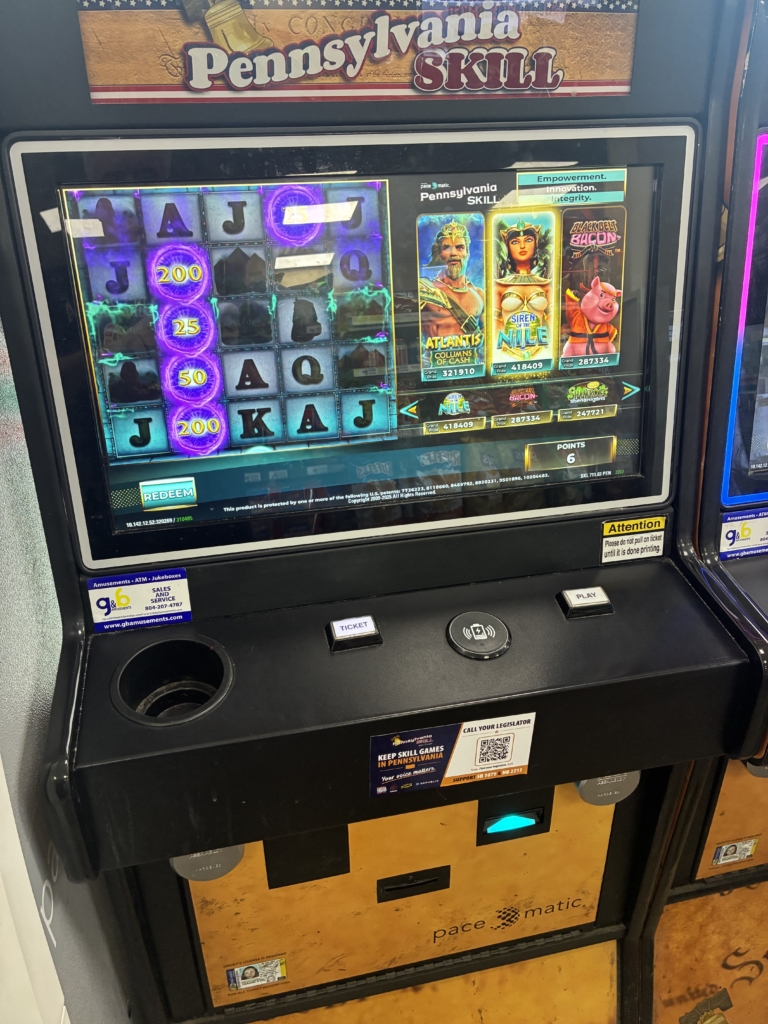
When the state Supreme Court ruled in June that Pennsylvania’s 70,000 skill games are like slot machines, it gave the legislature 120 days to regulate the machines.
The deadline is Oct. 13 and, without an agreement, law enforcement could theoretically confiscate the machines.
“The time’s running out,” said Mike Barley, chief public affairs officer for Pace-O-Matic, a Georgia company that develops skill games.
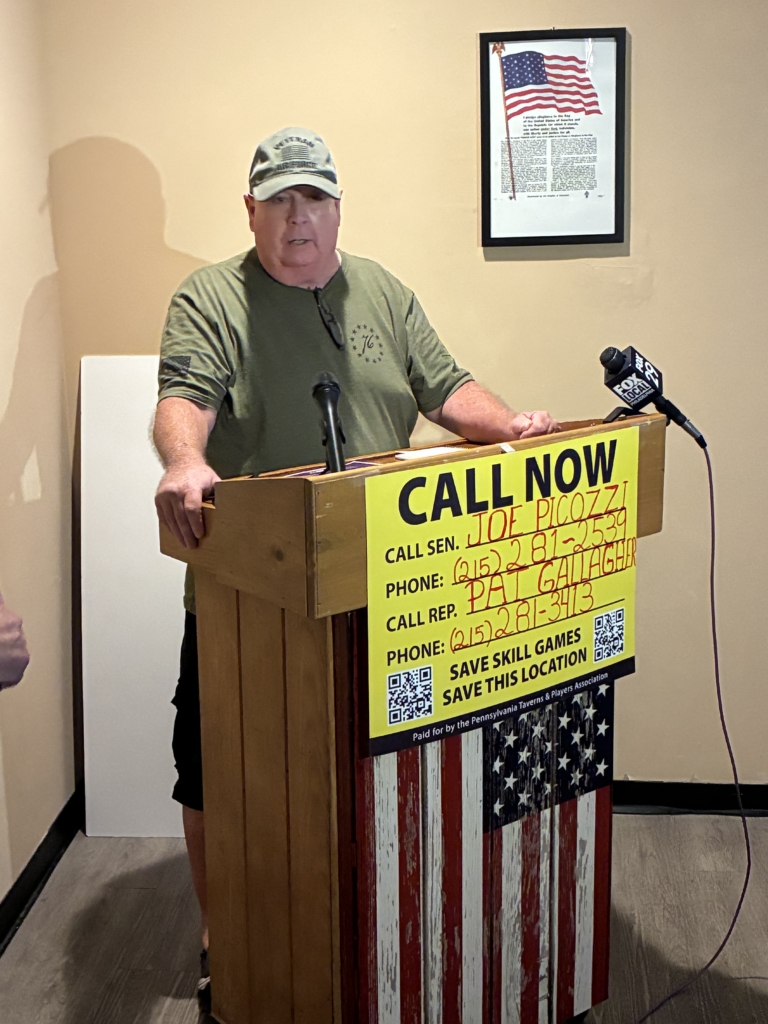
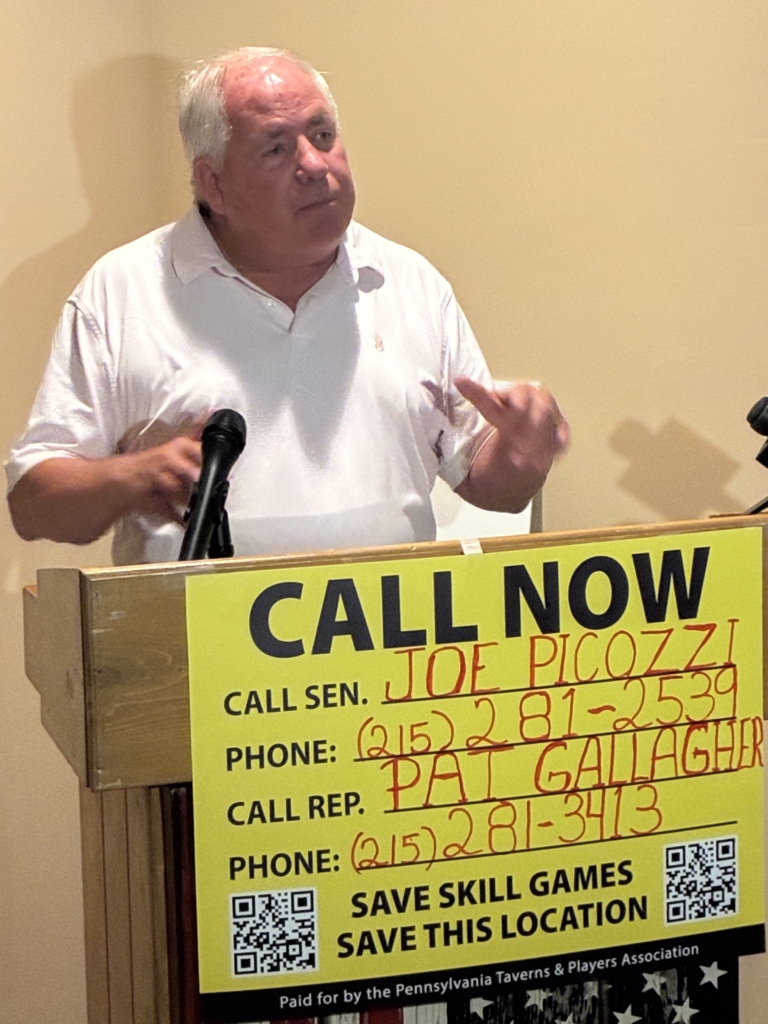
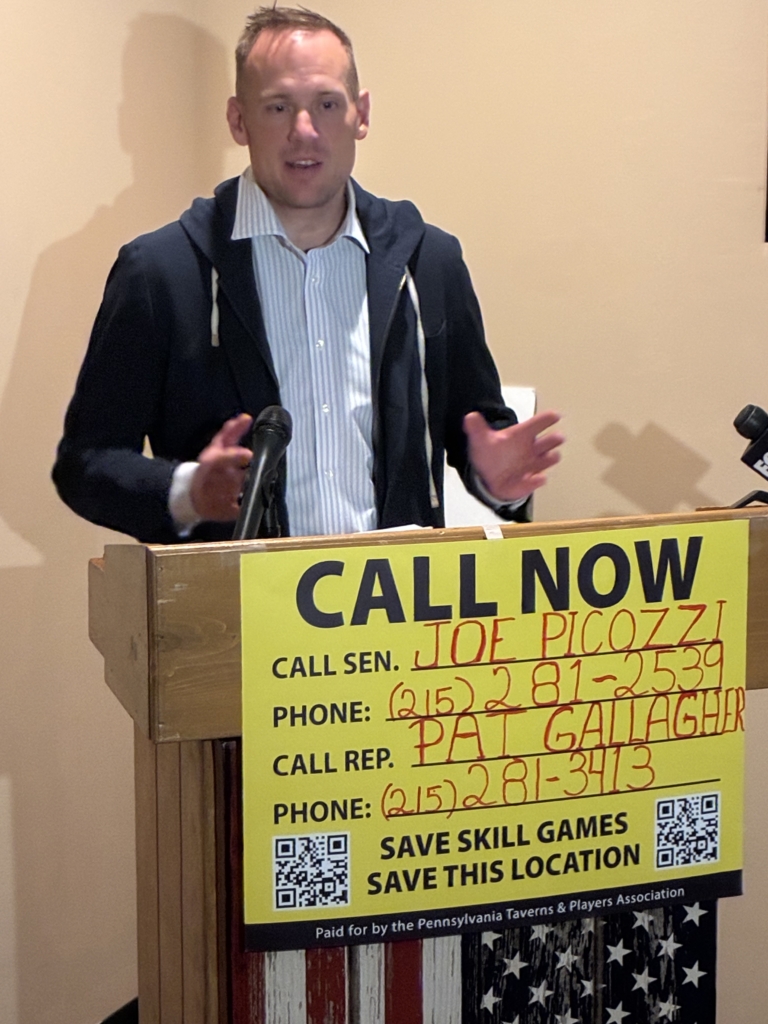
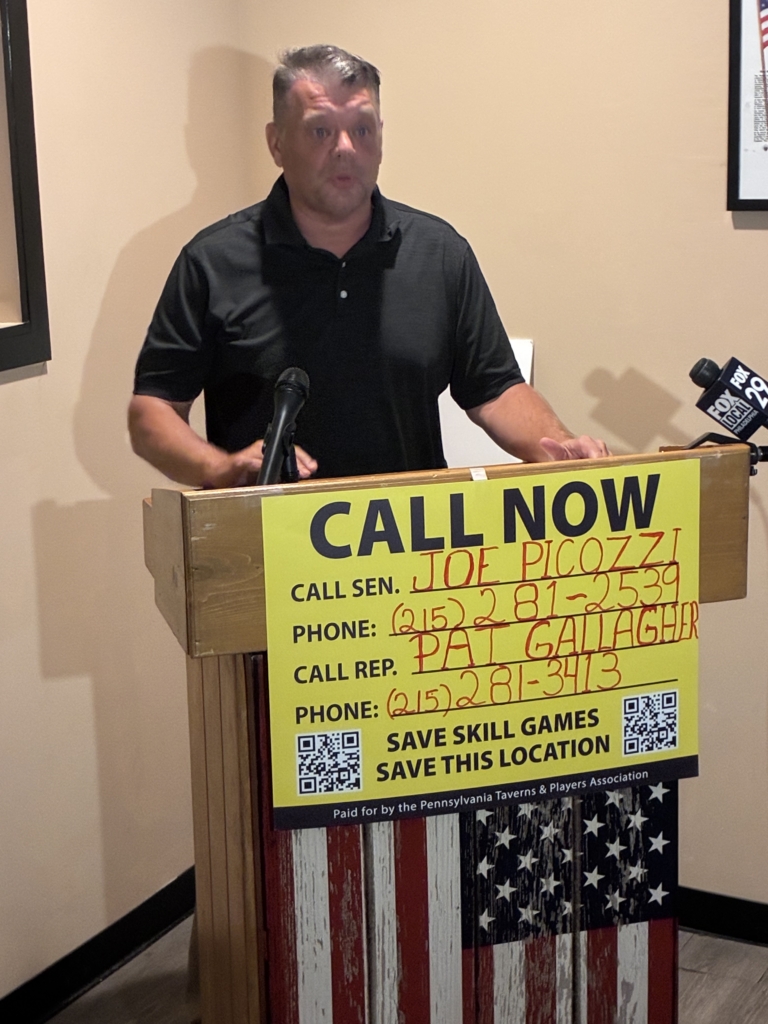
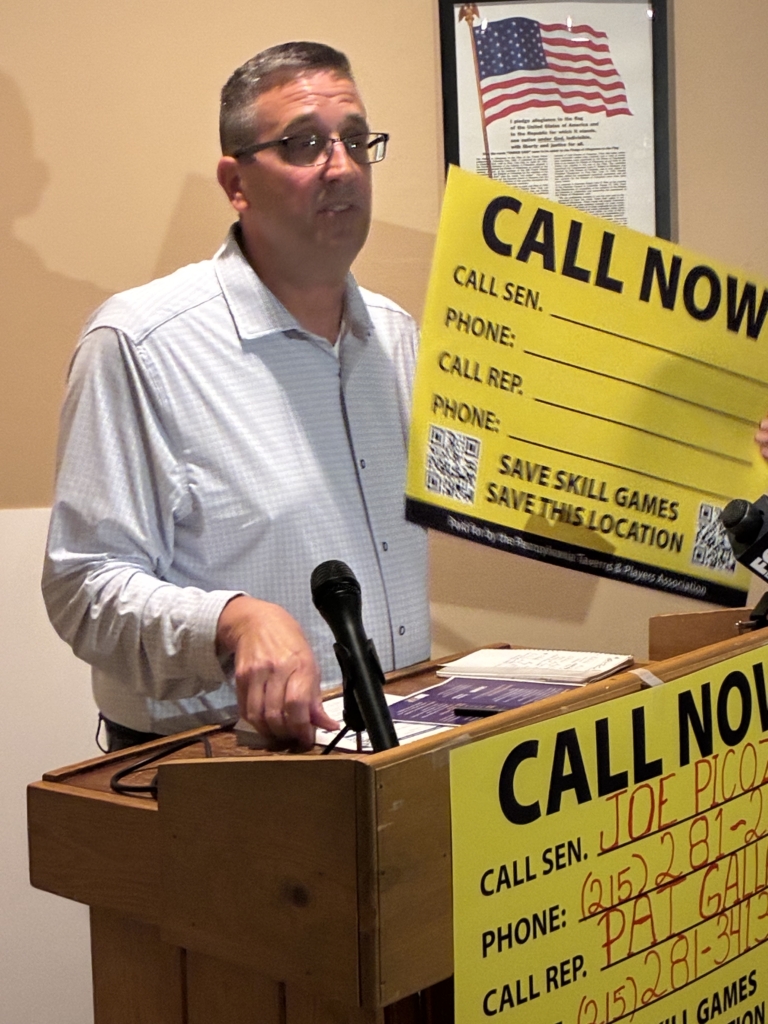
Barley attended an Aug. 20 news conference at Knights of Columbus Regina Coeli Council social club, 9617 James St.
Skill games are at places like KOC Regina Coeli, and home association president Patrick McMullen knows there are forces that want to tax the machines to the point that social clubs would lose needed revenue.
“We’ve got to fight them now,” McMullen said.
McMullen and others at the news conference support Senate Bill 1079 and House Bill 2213, bipartisan legislation that would place a monthly fee of $500 per machine. The measure, according to supporters, would generate $300 million in state tax dollars in the first year of regulation.
But the Senate, House and Gov. Josh Shapiro don’t seem close to a deal.
“It’s a long fight ahead,” McMullen said.
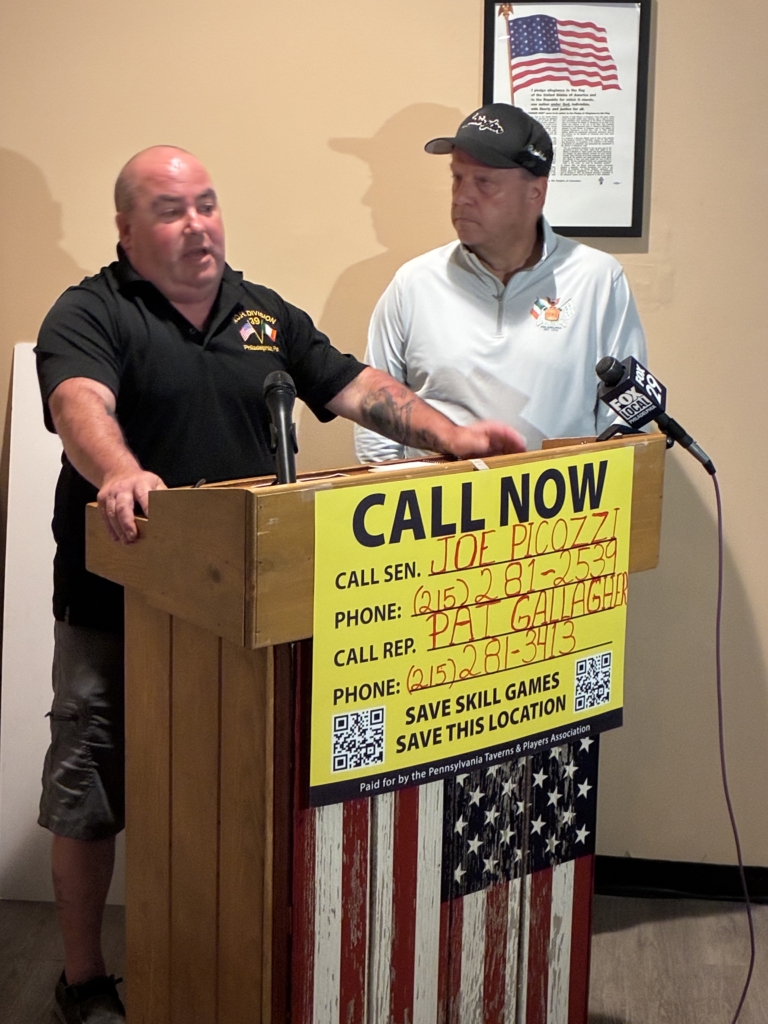
Others at the event included state Reps. Pat Gallagher, Danilo Burgos (co-sponsor of House Bill 2213) and Keith Harris; City Councilman Mike Driscoll; Tony Yula, of Apple Vending and Republic Amusements; Jeff Millay, of the Miele Group; Matt McIntyre and Shawn Anderson, of Ancient Order of Hibernians Divisions 87 and 39, respectively; and former Councilman Bobby Henon, of Pennsylvania Skill, whose games are made by Pace-O-Matic.
At the news conference, Pennsylvania Skill Charitable Giving presented a check for $5,000 to the Knights of Columbus.
Small businesses such as bars, restaurants and grocery stores and nonprofits such as the Knights of Columbus, veterans organizations, volunteer fire companies, fraternal clubs and AOH divisions use proceeds from the machines to stay in operation.
“We need the money that these games generate,” said Anderson, president of Tacony-based AOH Division 39. “We do need it to survive.”
Millay noted that his 91-year-old Williamsport-based company employs 170 people and uses Pennsylvania products to make the machines. He hopes that, in the end, lawmakers understand how important the games are for the local economy.
“It’s supplemental income for 10,000 businesses,” he said. “That’s a lot of businesses that are in jeopardy.”
Shapiro has called for a 52 percent tax on machines, a little less than the 55 percent that casinos pay for slot machines. Some Senate Republicans back a 35 percent fee, while another proposal calls for a 16 percent levy.
Millay described the fight as “Main Street vs. Wall Street.” Burgos called it “David vs. Goliath,” adding that he hopes fellow lawmakers “stand up for the little guy.”
In the absence of a deal, Burgos does not expect police to seize the machines.
“They have real crime to go after,” he said.
Driscoll, a former bar owner, said casinos are getting richer, but said nonprofits rely on catered parties and skill games at their halls to keep going.
“This is about survivability,” he said.
Gallagher, a member of the Gaming Oversight Committee, is a co-sponsor of House Bill 2213, which he sees as the right response to the Supreme Court decision, taxing the machines to generate much-needed revenue for the state, limiting the number to 50,000 statewide and allowing local governments to set safety standards while keeping the tax at a rate that would allow small businesses and nonprofits to continue operating.
“This is the lifeblood of America, the lifeblood of Pennsylvania, the lifeblood of Philadelphia and the lifeblood of the 173rd Legislative District,” he said. ••