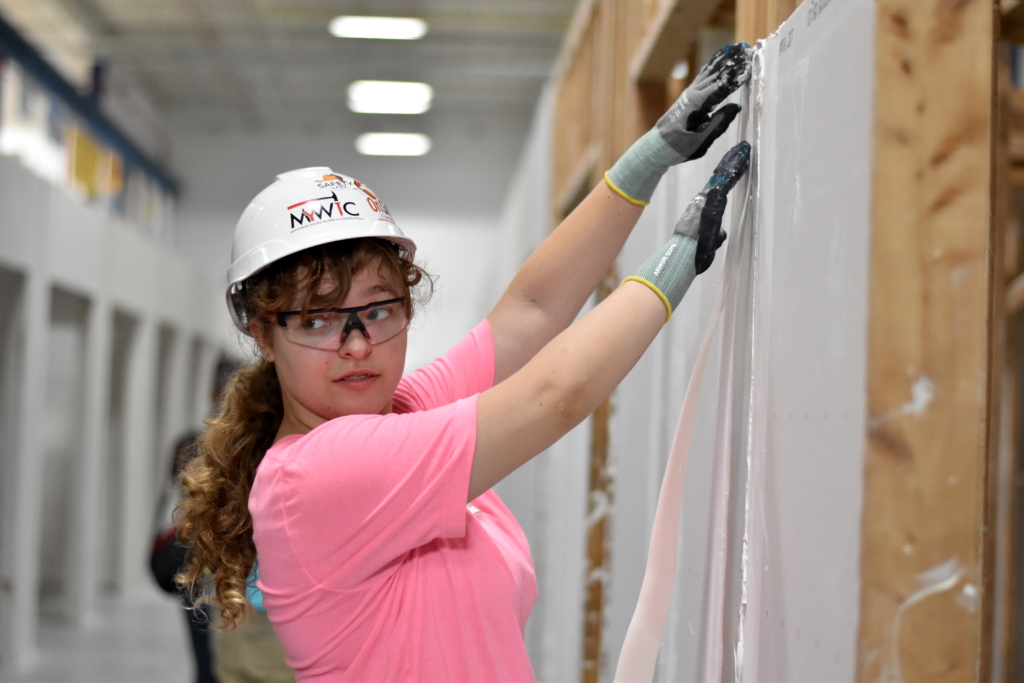
The only price for valuable experience and knowledge was a little sweat equity.
A free course provided by Mentoring young Women in Construction allowed female students in seventh through 12th grade to receive hands-on training from experts in the contraction industry.
“I’ve been in 18 years and it probably took me a good six years to truly understand what I was a part of, let alone about the benefits of being a part of it,” said commercial paint instructor Kerry Ann Madden. “This is really just to educate young women on what the building trades are and what they have to offer.”
In June and July, Mentoring young Women in Construction, known as MyWIC, offered free day camps that introduce young women to careers in construction, facilities management and the skilled trades.
Two sessions, that were each two weeks long, welcomed a total of 75 children from different parts of the city. A Northeast section ran from June 15-26. A South Philadelphia section followed from July 6-17
The camps provide direct exposure to real job sites, union training centers and active construction environments. Each day in the camp was held at a different location like the Bricklayers Training Center or the Finishing Trades Institute in Northeast Philly, or the Electricians IBEW 98 headquarters at the Navy Yard. Other sites included the Carpenters EASC Technical College, Sheet Metal Training Center and the Amtrak 30th Street Station.
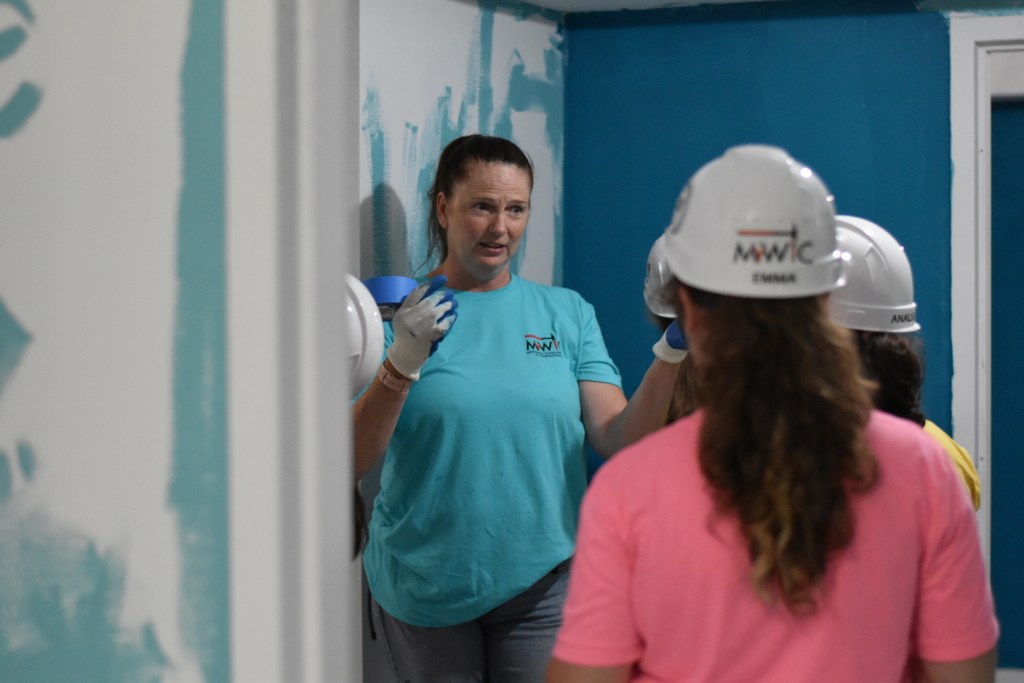
“Most girls that come through want to be carpenters and electricians, because that’s all they know,” Madden said. “They don’t know what an insulator does or what a glazier does. They don’t know what a tile setter does. They don’t know the options that are out there. It’s more breaking it down on what the trades are. If you’re unfamiliar with it, it’s a lot to take in.”
The program gives participants real-world experience, mentorship and access to opportunities many young women rarely see before choosing a career path. Many young students don’t know their future career path. And even if they have some idea of what they want to do, it’s always helpful to see the other options out there.
A student named Anna from Neumann-Goretti High School was a prime example as she prepared for her junior year of high school.
“I’ve always wanted to be a pediatric nurse but this also gives me an idea of what I can do if that does’t work out for any reason,” she said while taking part at the Finishing Trades Institute on July 8. “And it just gives me other options before I go to college.”
Now in its 17th year, MyWIC has provided free camps to young women with the hopes they will pursue a career in the trades. Currently only about 5 percent of the trades workforce in Philadelphia is made up of women. In addition to the MyWIC program introducing young women to career pathways, it boosts self-confidence and encourages them to consider careers where they can build, lead and make a lasting impact.
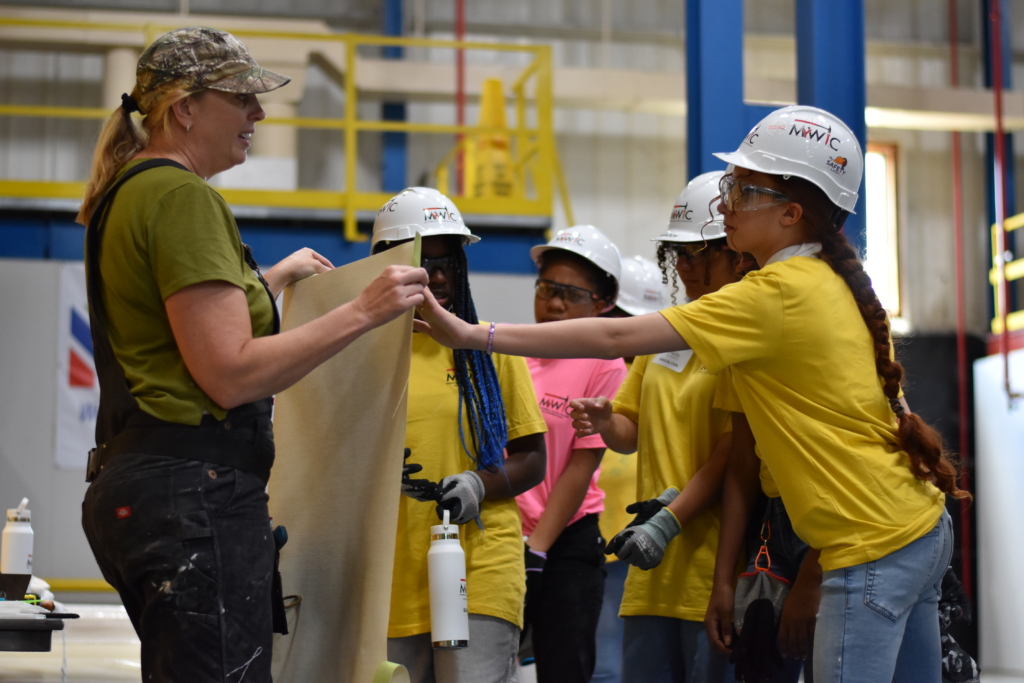
“Through MyWIC, we are cultivating the next wave of female leaders in the skilled trades,” said Mary Gaffney, president of the NAWIC Philadelphia Foundation. “Women remain significantly underrepresented in construction, yet the need for skilled professionals continues to grow. This program helps young women build confidence, learn directly from industry professionals and see that these careers are absolutely within reach.”
At the Finishing Trades Institute, girls were put in small groups and took turns at different stations throughout the facility. They learned drywall, painting, wall paper and other skills from volunteers who are professionals in the trade. Each station was about 35 minutes.
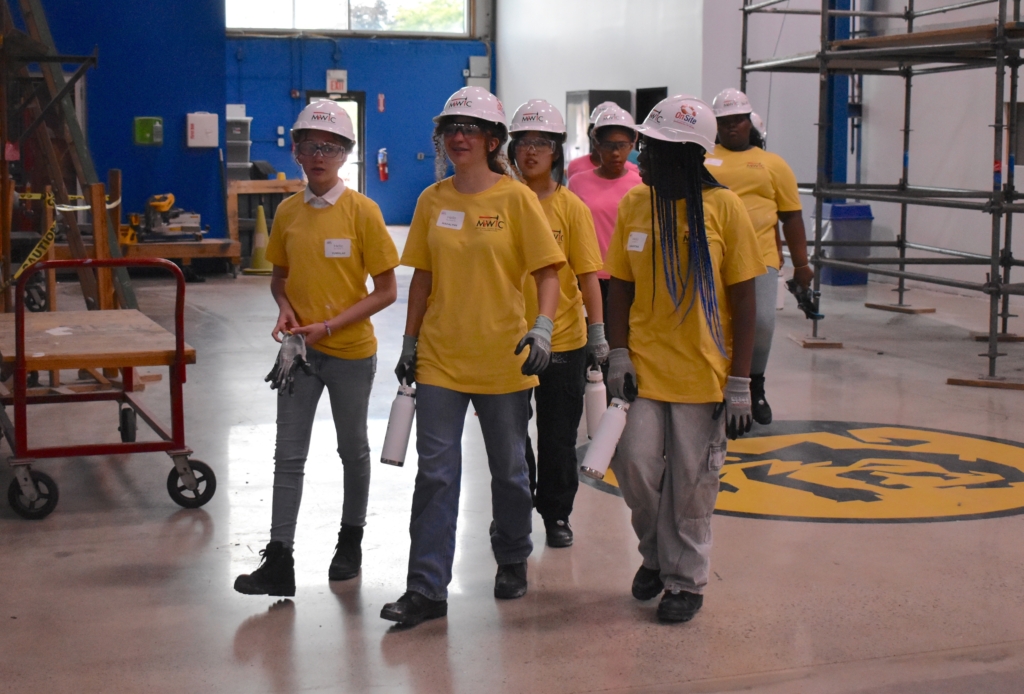
“It’s an opportunity that is something that can change their life,” said Sue Geyer, a coach with MyWIC Camp. “Speaking to the women that are here today on how it has changed their lives and how they can provide for themselves and their families.”
Instead of accumulating hundreds of thousands of dollars in student loans, the trades provide a way for young women to make good money almost immediately.
“It’s a pay scale that men and women get the same in these trades and it’s nice joining a union,” Geyer said. “Once you leave you have your annuity and benefits and you’re well off. We don’t discourage anyone from going to college. But if it’s not for you, try a trade.” ••